

This editorial originally appeared in Playbooks (page 29) on Wednesday, March 4, 2026:
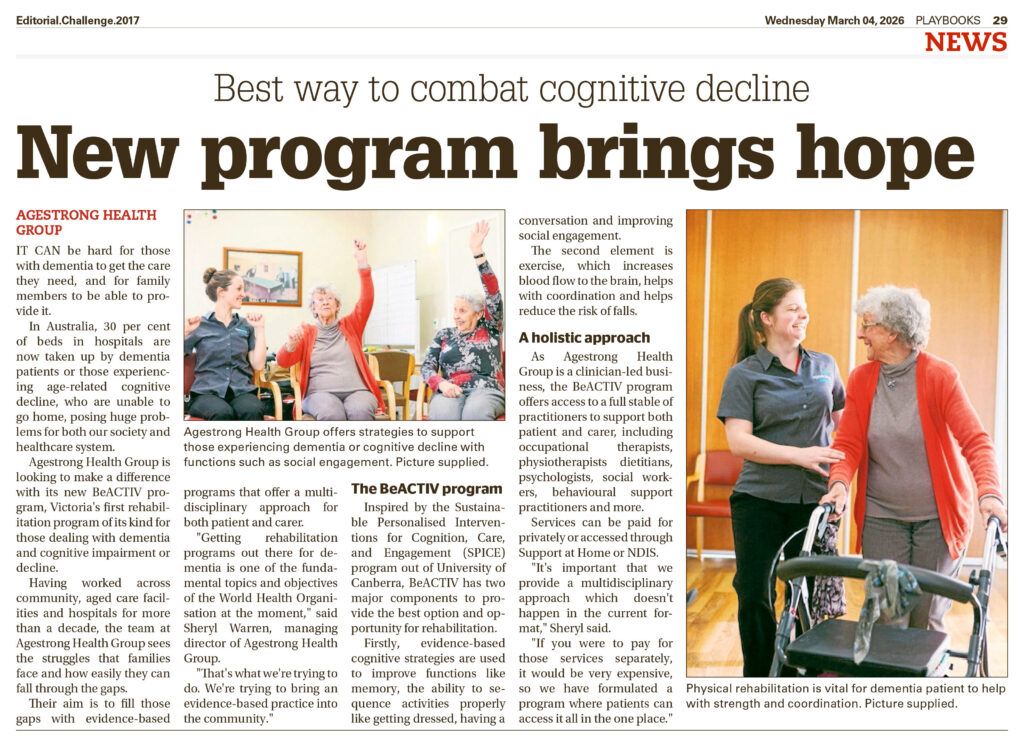
View the original article (PDF) – full text below.
It can be hard for those with dementia to get the care they need, and for family members to be able to provide it.
In Australia, 30 per cent of beds in hospitals are now taken up by dementia patients or those experiencing age-related cognitive decline, who are unable to go home, posing huge problems for both our society and healthcare system.
Agestrong Health Group is looking to make a difference with its new BeACTIV program, Victoria’s first rehabilitation program of its kind for those dealing with dementia and cognitive impairment or decline.
Having worked across community, aged care facilities and hospitals for more than a decade, the team at Agestrong Health Group sees the struggles that families face and how easily they can fall through the gaps.
Their aim is to fill those gaps with evidence-based programs that offer a multidisciplinary approach for both patient and carer.
“Getting rehabilitation programs out there for dementia is one of the fundamental topics and objectives of the World Health Organisation at the moment,” said Sheryl Warren, managing director of Agestrong Health Group.
“That’s what we’re trying to do. We’re trying to bring an evidence-based practice into the community.”
The BeACTIV program
Inspired by the Sustainable Personalised Interventions for Cognition, Care, and Engagement (SPICE) program out of University of Canberra, BeACTIV has two major components to provide the best option and opportunity for rehabilitation.
Firstly, evidence-based cognitive strategies are used to improve functions like memory, the ability to sequence activities properly like getting dressed, having a conversation and improving social engagement.
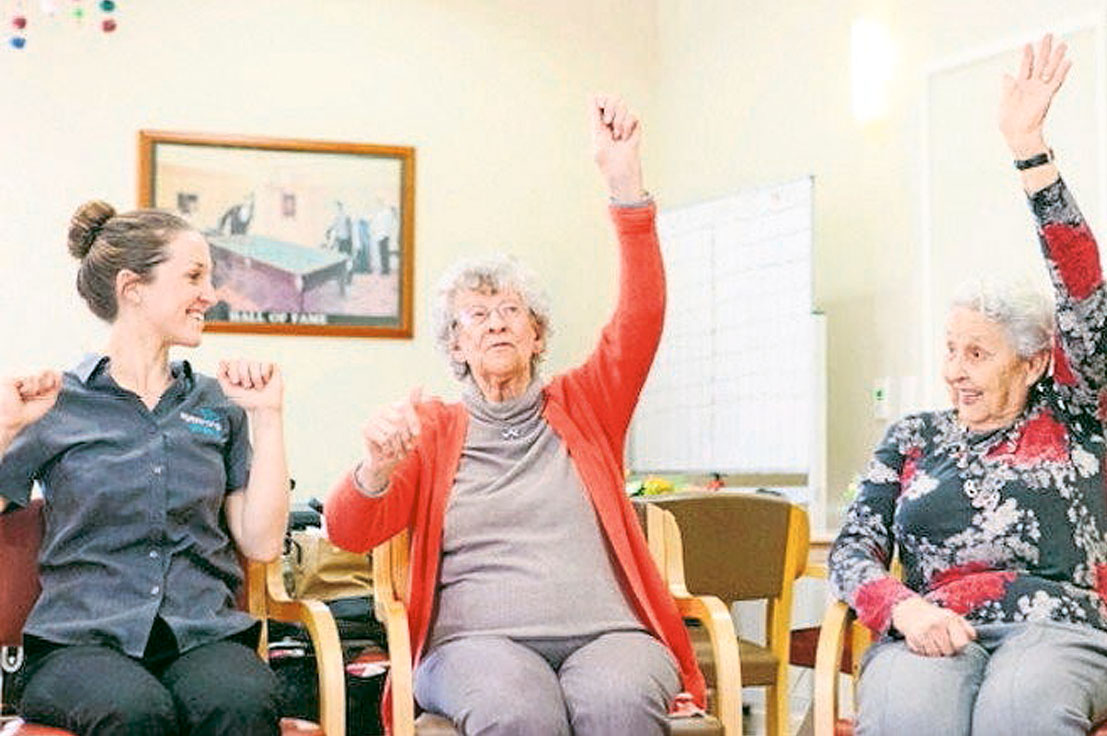
The second element is exercise, which increases blood flow to the brain, helps with coordination and helps reduce the risk of falls.
A holistic approach
As Agestrong Health Group is a clinician-led business, the BeACTIV program offers access to a full stable of practitioners to support both patient and carer, including occupational therapists, physiotherapists dietitians, psychologists, social workers, behavioural support practitioners and more.
Services can be paid for privately or accessed through Support at Home or NDIS.
“It’s important that we provide a multidisciplinary approach which doesn’t happen in the current format,” Sheryl said.
“If you were to pay for those services separately, it would be very expensive, so we have formulated a program where patients can access it all in the one place.”
Agestrong Health Group offers strategies to support those experiencing dementia or cognitive decline with functions such as social engagement. Picture supplied.
Physical rehabilitation is vital for dementia patient to help with strength and coordination. Picture supplied.